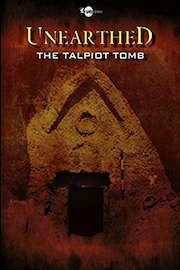
Unearthed: The Talpiot Tomb is a documentary film directed by Simcha Jacobovici and James Cameron, which delves deep into a controversial archaeological discovery that has been stirring up controversy since 1980. The film follows Jacobovici's journey to investigate the tomb and its contents, which some claim is the final resting place of Jesus and his family, while others dismiss it as a mere hoax or a coincidence.
The Talpiot Tomb, located in Jerusalem, was discovered in 1980 by construction workers. It was a perfect opportunity for archaeologists to investigate, searching for clues about the ancient settlement that once existed in this area. What followed was a series of dramatic events and speculations. Inside the tomb, they discovered ten ossuaries, or bone boxes, filled with human remains, inscriptions, and symbols. One of the boxes bore the inscription "Yeshua bar Yehosef" (Jesus son of Joseph). The other inscriptions included names such as Mary, Yose, and Jehuda â all connected to the biblical story of Jesus.
The media quickly picked up on the story, and it became an instant sensation. Religious scholars and archeologists divided into two camps: those who believed that the tomb could be the final resting place of Jesus and his family, and those who thought the inscriptions were a mere coincidence. The controversy was fueled by the fact that the original excavations were not conducted according to modern scientific methods.
The filmmakers take a pro-Talpiot Tomb side in the documentary, but they do make a case by presenting evidence for why they believe this could be a hugely significant find. They interview experts who believe that the Talpiot Tomb holds several clues that can shed light on the lives of Jesus and his family. They point out that the names inscribed on the bone boxes were not common at the time of Jesus and that some of the inscriptions contained hints that Jesus was married and had children.
The interviews with archeologists in the film explain in detail the controversies around the excavation of the tomb, with many questioning the techniques used. It seems that the excavation was carried out in a rush, with workers removing the ossuaries from the tomb long before the archaeologists arrived. As such, the evidence that could have been part of a scientific study was eradicated, and researchers had to rely on later records for analysis.
The filmmakers also discuss the role of the traditional church in denying the existence of the tomb of Jesus. They claim that the Catholic and Protestant churches have vested interests in preserving their narrative of the story of Jesus, which conflicts with any evidence that questions the Bibleâs version of events. It seems that the film takes the position that there is much more to explore in this region that could help paint a more in-depth picture of Jesus' life.
The documentary does a good job of putting forth some of the significant arguments in favor of the Talpiot Tomb being the tomb of Jesus and his family. It also sets out to debunk some of the myths around the tomb, including sensational claims that it could contain the Holy Grail, evidence of Jesus' resurrection, and other fantastical theories.
Unearthed: The Talpiot Tomb is an intellectually stimulating film that raises many important questions. The movie handles religious beliefs respectfully and illuminated the social and political pressures that come with any inquiry that challenges established narratives. It is a fascinating journey through the world of archeology, where objective science and faith meet head-on. While this movie will do little to bring the various factions together regarding the discovery of the Talpiot Tomb, it is an engaging consideration of a topic that will continue to engender heated debate.
Unearthed: The Talpiot Tomb is a documentary with a runtime of 44 minutes.