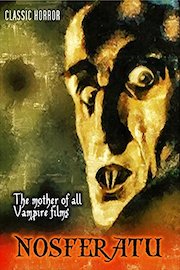
Watch Nosferatu: The Mother of all Vampire Films
- NR
- 2015
- 1 hr 24 min
Nosferatu is considered to be one of the most important horror films in cinematic history. This silent film, released in 1922, was directed by F.W. Murnau and starred Max Schreck as Count Orlok, the infamous vampire at the center of the story. The film is loosely based on Bram Stoker's novel Dracula, but due to copyright issues, the names and some of the details were changed. The story follows Thomas Hutter, a real estate agent who travels to Transylvania to sell a property to Count Orlok. As he stays at the Count's castle, Hutter begins to realize that Orlok is not a normal man, but a vampire with a thirst for blood. Hutter escapes and returns home to his wife, Ellen, but not before Orlok follows him back to Germany.
From the moment the film starts, it is clear that this is not a typical horror movie of its time. The imagery is stark and haunting, and the music is ominous, setting the stage for the atmospheric story that is about to unfold. Schreck's portrayal of the vampire is also unique - he is not the suave, charismatic Dracula that audiences had seen before, but a gaunt, haunting creature with pointed ears and long, spindly fingers. Even his shadow is haunting, with its claw-like appearance resembling a bat.
One of the most famous scenes in the movie is when Orlok is seen traveling to Germany by ship. The visuals are striking, with the vampire's silhouette against the sail and the waves crashing beneath him. The scene oozes with atmosphere and tension, making it one of the most iconic moments in horror film history.
The movie also employs symbolism to great effect. Orlok is seen feeding on rats, reinforcing the idea that he is not human, and his lack of reflection in a mirror is a nod to vampire lore. The use of shadows is also intentional, with Orlok's lack of reflection mirrored in his elongated, bat-like shadow - a visual echo of his true nature.
One of the most striking things about Nosferatu is the way it creates a mood of terror and tension without the use of sound. The film is completely silent, but the score by Hans Erdmann is masterful in creating an eerie and tense atmosphere. The music builds and swells, rising to a crescendo during moments of intense horror.
Despite its age, the film still holds up today as a masterpiece of horror cinema. The visuals are haunting and the story is gripping, with a sense of dread that builds throughout. Its influence can be seen in countless other horror films, from the iconic silhouette of Orlok to the use of sound and music to create atmosphere.
In many ways, Nosferatu can be considered the mother of all vampire films. It created a template that has been followed by countless other movies, from the Hammer Horror films to recent hits like Let the Right One In and Only Lovers Left Alive. It set the standard for how a vampire should look and act, and established the idea that these creatures are not to be trifled with.
In conclusion, Nosferatu is a seminal horror film, one that has stood the test of time and continues to chill audiences to the bone. Its influence can still be felt today, and its images - from the shadow of Orlok to the eerie ship scene - continue to inspire filmmakers around the world. For anyone interested in the history of horror cinema, Nosferatu is a must-see, a film that created a legend and became a legend in its own right.