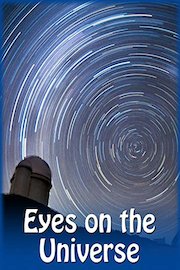
Eyes on the Universe - A Journey to the Largest Telescopes on Earth is a breathtaking documentary that explores the world's most advanced astronomical observatories. The movie takes the viewers on a journey to the most remote corners of the world, showcasing the impressive architecture, sheer scale, and innovative technology of these giant telescopes.
The documentary begins with a brief overview of the history of astronomy and how it has evolved over time. The narrator explains how early astronomers used the naked eye to observe the cosmos, and how the invention of the telescope revolutionized the field. From there, the movie jumps into the present day and introduces us to some of the most advanced telescopes on the planet.
The first observatory we visit is the Keck Observatory in Hawaii. Its twin 10-meter telescopes are among the largest optical telescopes in the world. The movie showcases the telescopes' unique design and the advanced technology used to manufacture and maintain them. We also get an inside look at how astronomers operate the telescopes and the incredible images they are able to capture.
Next, we travel to Chile to explore the Atacama Large Millimeter Array (ALMA), a collection of 66 radio telescopes that work in unison to observe the universe in millimeter and submillimeter wavelengths. The documentary shows how the ALMA telescopes are able to penetrate the dust clouds that surround distant stars and galaxies, making it possible to study the birth of stars and planets.
The movie takes us on a journey around the world, visiting the European Southern Observatory's Very Large Telescope (VLT) in Chile, the Gran Telescopio Canarias (GTC) in Spain, and the Subaru Telescope in Hawaii. Each observatory boasts unique features and technology, and the documentary goes into great detail about how each facility advances our understanding of the universe.
One of the highlights of the movie is the stunning visual effects used to illustrate the science behind the telescopes. The documentary uses 3D renderings to show how radio telescopes collect signals to form an image, and how interferometry works to combine signals from multiple telescopes to create a detailed view of the universe. These visualizations make the science behind the telescopes more accessible to the average viewer and show just how incredible these machines are.
Eyes on the Universe - A Journey to the Largest Telescopes on Earth also covers the people behind the telescopes. The documentary shows the dedication and passion of the astronomers and technicians who operate and maintain these massive machines. We learn about the rigorous training required to operate the telescopes and the long hours they work to make groundbreaking discoveries.
Overall, Eyes on the Universe - A Journey to the Largest Telescopes on Earth is a fascinating look at some of the most incredible telescopes on the planet. The movie successfully marries science and art to create a documentary that is both informative and visually stunning. It is a must-watch for anyone who has ever wondered about the mysteries of the universe and the technology that unlocks its secrets.
Eyes on the Universe - A Journey to the Largest Telescopes on Earth is a 2018 documentary with a runtime of 29 minutes.