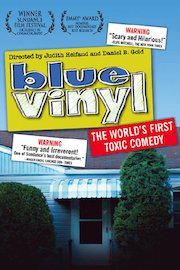
Blue Vinyl is a captivating and eye-opening documentary about the health and environmental dangers of PVC, a plastic found in countless household products. The film follows the personal journey of filmmaker Judith Helfand as she investigates the impact of PVC on her own family and the larger community. The documentary begins with Helfand's childhood memories of Vinylite, a vinyl plastic factory in her hometown of Merrick, New York. Many of her family membersâincluding her grandparents, parents, and sisterâsuffered from health problems that she suspects were caused by pollution from the factory. As an adult, Helfand becomes interested in the PVC industry and its potential dangers.
The film chronicles Helfand's travels across the United States and into Europe, where she interviews experts, activists, and residents of communities affected by PVC. Along the way, she discovers that PVC is one of the most toxic and environmentally damaging plastics in existence. It is made from highly dangerous chemicals such as vinyl chloride, which has been linked to cancer and other illnesses.
One of the most compelling segments of the film is Helfand's visit to Lake Charles, Louisiana, where many PVC factories operate. She meets with residents who have suffered from health problems and environmental damage caused by the factories. Helfand also interviews workers at a PVC plant who discuss the dangerous conditions they face on a daily basis. The footage is both heart-wrenching and shocking, serving as a wake-up call to the dire consequences of PVC production.
Throughout the film, Helfand also explores the pervasiveness of PVC in everyday life. She interviews designers and architects who are finding innovative ways to eliminate or replace PVC in products such as flooring, upholstery, and medical devices. The documentary underscores the importance of individual choices and the potential for collective action to protect public health and the environment.
One of the strengths of Blue Vinyl is its personal approach. Helfand's journey adds a relatable and human element to the complex issue of PVC. Her interactions with her family members and friends, who initially dismiss her concerns as paranoid, highlight the difficulty of convincing people of the unseen and slow-moving dangers of environmental pollution. At the same time, Helfand's persistence and passion are inspiring, reminding viewers that small actions can lead to big changes.
The documentary also benefits from its strong visual style. Interspersed with animated sequences, archival footage, and stunning aerial shots, the film keeps the audience engaged and visually stimulated. The use of music is also effective, with a catchy and memorable theme song, "Vinyl," by the indie band The Aluminum Group.
Blue Vinyl, released in 2002, remains relevant today. As climate change and environmental issues continue to threaten public health and safety, the documentary serves as a timely reminder of the need for individuals and corporations to take responsibility for their actions. It is a powerful call to action and a must-see for anyone interested in environmentalism, public health, or documentary filmmaking.